Jump Cuts Explained: When to Keep the Visible Edit


A jump cut removes time within a continuous shot, leaving a visible change in the subject's position or action. It can make a spoken edit more direct. Whether to keep that jump visible depends on what it does to the sentence, picture and sound.
Review the join before adding an effect
First check that the meaning survives. Then inspect the visible change and listen across the boundary. A zoom, dissolve or cutaway cannot restore a word or reaction you accidentally removed.
What makes an edit a jump cut?
A continuous camera view records a person speaking. Remove a stretch from its middle and join the remaining sections: the person's head, hands or posture may change instantly. The edit exposes the missing time. Adobe's jump-cut explanation describes this break within a sequential shot.
A cut to another camera view is a different editorial choice. A digital zoom changes the crop; an optical zoom changes the lens framing during recording. Neither term is a synonym for deleting time. You can combine reframing with a cut, but the reframing should help the viewer rather than serve as an automatic repair.
Inspect one saved jump before hiding it
Gling's existing Example demonstration contains two retained source ranges separated by an omitted interval. The source recording runs continuously through that interval; the prepared Example edit joins the retained ranges. The table exposes the exact boundary you can inspect.
| Part | Source range | Editorial question |
|---|---|---|
| First retained section | 30.84–36.93 seconds | Does its ending leave a complete word and the needed context? |
| Omitted interval | 36.93–43.95 seconds | Does removing these 7.02 seconds preserve the intended thought? |
| Next retained section | 43.95–51.69 seconds | Does its opening sound and look right immediately after the first section? |
The join occurs about 6.09 seconds into the prepared edited excerpt, where source time moves from 36.93 to 43.95. This is a map of one saved edit, not a recommended pause length, accuracy score or new AI-processing result.
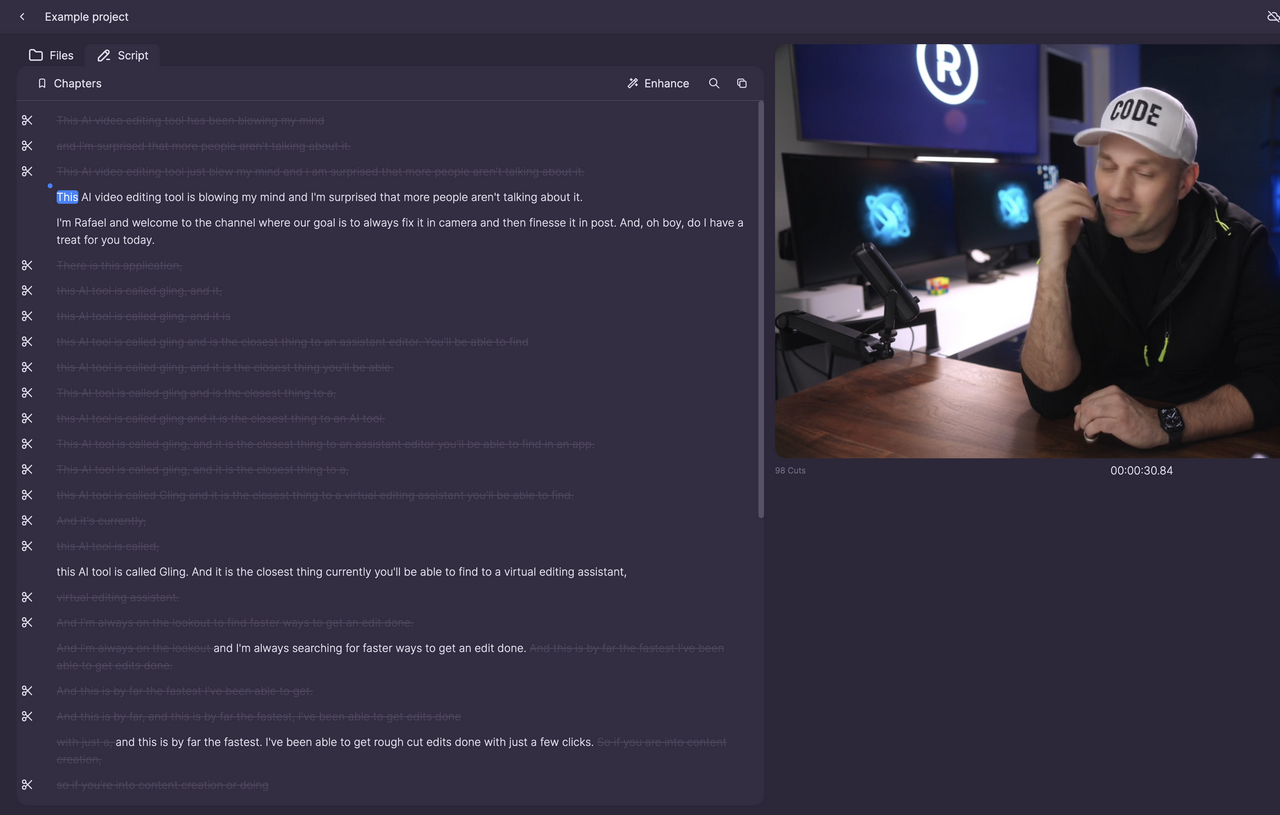
Open the existing Original / Example edit demonstration to compare the passage. Evaluate the join with your ears as well as the picture.
Make three separate review passes
- Meaning: listen to the sentence before and after the edit. Keep qualifications, necessary breaths and reactions that change what the speaker means. A repeated phrase may be redundant; an apparent pause may carry a response.
- Picture: watch the boundary without concentrating on the words. Notice a change in posture, hand position, eye line or an object in the background. Decide whether the visible jump distracts from the point being made.
- Sound: listen across the boundary again. Check the beginning and end of each word, an abrupt change in room tone, and overlapping music or other tracks. Adjust the boundary if the join clips speech.
Changing timing is often the first useful experiment. Restoring a little material may make the delivery easier to follow without changing the entire edit. There is no single pause duration or transition that works for every voice and scene.
Keep the cut visible, change it or cover it?
| Observation | Try | Check |
|---|---|---|
| The message is clear and the jump is acceptable | Keep the direct cut. | The sequence remains easy to watch at normal speed. |
| A word or reaction feels rushed | Restore material or move a boundary. | The repair preserves meaning, rather than hiding the problem visually. |
| The visible jump interrupts an explanation | Use a relevant cutaway or a genuinely different camera view if you have one. | The inserted picture adds information and its rights are cleared. |
| A punch-in seems useful | Inspect a modest alternate crop. | The face, text and picture quality hold up at the delivery size. |
A dissolve can show a passage of time, but it also changes the visual effect and may briefly overlap faces or gestures. Do not add it to every join by habit. A cutaway should show something relevant; it should not imply an event or reaction that did not happen.
Where Gling fits in the edit
For spoken footage, Gling analyzes silences, filler words and bad takes and lets you review cuts and restore parts you want to keep. Make the editorial decision yourself. Use the pause-review guide for pacing, or the trimming guide when only the beginning or ending needs to go.
A direct MP4 is a video-file output; supported paid desktop timelines let you continue in an editor. Export requires sign-in, and Free video exports have a watermark. Check current plans. After a timeline export, check that your editor has linked the source media and retained the intended timing.
Check the delivered join
Play the actual exported file across the join, then check the full sentence at normal speed. Inspect captions and other tracks after the timing changes. A technically valid export does not establish that the edit communicates what you intended; that last judgment still belongs to the person making the video.
Keep this guide for your computer
Continue with this guide on your computer
Copy or share the exact guide link.
You can also select and copy the guide link above.